What Is The Difference Between A Boiler And A Water Heater?
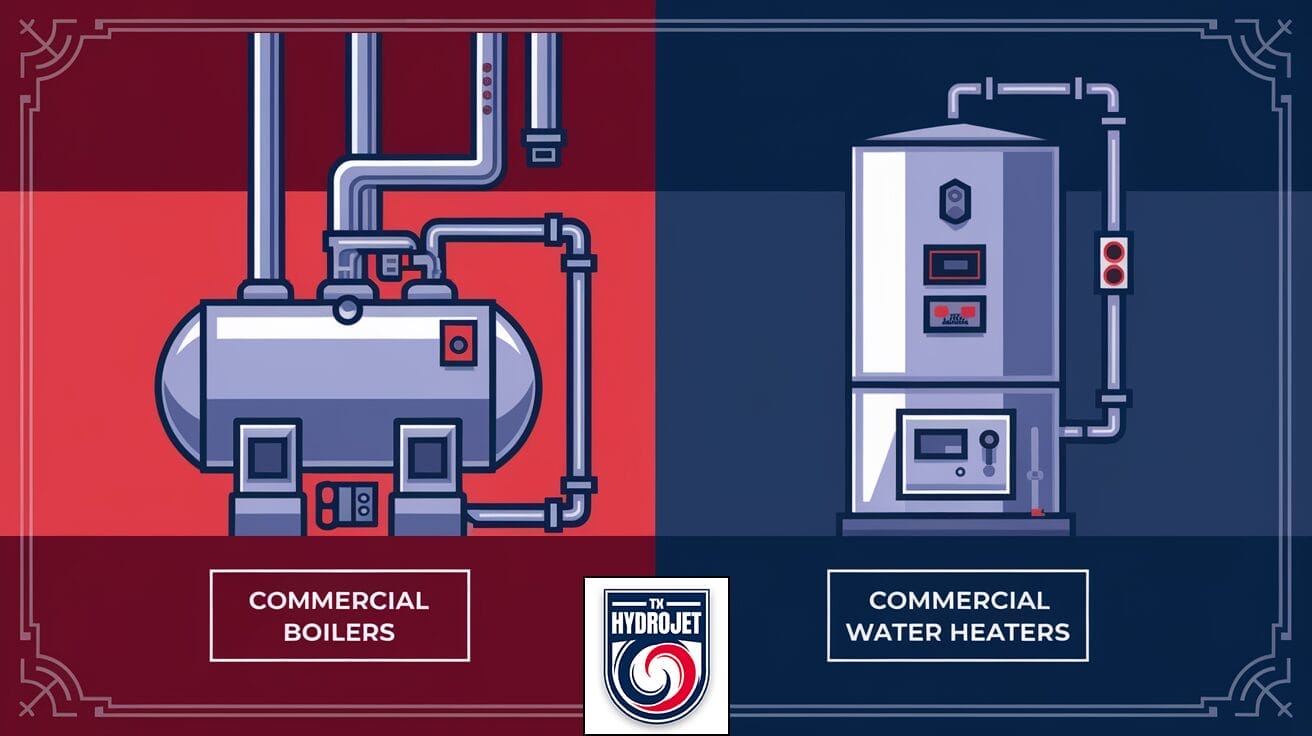
When it comes to heating water for your home or business, two common appliances often come to mind, boilers and water heaters. While both serve the purpose of providing hot water, they have distinct differences in functionality, efficiency, and applications. Boilers are versatile systems that not only heat water but also distribute it for space heating, while water heaters focus solely on producing hot water for domestic use. This fundamental difference affects their design, efficiency, and applications.
What Is A Boiler?
A boiler is a sophisticated heating system that heats water or generates steam for various purposes. It’s designed to distribute heat throughout a building using radiators, baseboard heaters, or underfloor heating systems. Boilers can also supply hot water for taps and appliances, making them a comprehensive solution for both heating and hot water needs.
Boilers come in various types, each with its own unique features and benefits:
Fire-Tube Boilers
Fire-tube boilers are a classic design where hot gases from combustion pass through tubes surrounded by water. This efficient heat transfer method makes them suitable for many industrial applications.
Water-Tube Boilers
In water-tube boilers, water flows through tubes heated by hot gases on the outside. This design allows for higher pressure and temperature capabilities, making them ideal for large-scale industrial and power generation uses.
Condensing Boilers
Condensing boilers are highly efficient modern systems that capture and use heat from exhaust gases, which would otherwise be wasted. This design significantly improves energy efficiency, making them an excellent choice for eco-conscious consumers.
What Is A Water Heater?
A water heater is an appliance specifically designed to heat and store water for domestic use. Unlike boilers, water heaters do not provide space heating. Their primary function is to supply hot water for everyday activities such as bathing, washing dishes, and doing laundry.
Water heaters come in two main types:
Storage Water Heaters
Storage water heaters, also known as tank water heaters, heat and store a large volume of water in an insulated tank. They continuously maintain the water temperature, ensuring hot water is readily available when needed.
Tankless Water Heaters
Tankless water heaters, also called on-demand water heaters, heat water directly as it flows through the device. They provide hot water only when needed, which can lead to energy savings compared to storage models.
Boilers Vs. Water Heaters
Now that we’ve covered the basics, let’s dive into a detailed comparison of boilers and water heaters across several key factors. This comparison will help you weigh the pros and cons of each system, considering both short-term convenience and long-term value. Understanding these differences is crucial for making an informed decision about which system best suits your needs. Here are all the factors this comparison will go over:
- Functionality
- Temperature
- Energy Efficiency
- Space Requirements
- Cost
- Maintenance
- Applications
- Lifespan
1. Functionality
Boilers function as comprehensive heating solutions, heating water or generating steam for various heating systems, such as radiators or underfloor heating. They can also supply hot water for taps and appliances, making them versatile for both residential and commercial use. Additionally, boilers play a crucial role in industrial applications, providing steam for manufacturing processes, cleaning, and heating in various sectors. In contrast, water heaters focus solely on heating water for domestic use, without any space heating capabilities. They are a straightforward choice for generating hot water for showers, dishwashing, and laundry, simplifying the hot water supply process in homes.
2. Temperature
Boilers can heat water to significantly higher temperatures compared to water heaters. Boilers are capable of heating water up to 200°F or more, which is necessary for effective space heating and certain industrial processes. Water heaters, on the other hand, typically heat water to a maximum of around 140°F to 160°F, which is suitable and safe for domestic use such as showers and washing dishes.
3. Energy Efficiency
When it comes to energy efficiency, boilers generally have the upper hand, especially for heating large spaces or multiple areas. Modern condensing boilers, in particular, are highly efficient as they recover heat from exhaust gases. Water heaters can vary in efficiency; tankless models tend to be more energy-efficient than traditional tank-style units since they heat water on demand, eliminating standby energy losses associated with storing hot water.
4. Space Requirements
Boilers typically require more space due to their size and the need for additional components such as expansion tanks and flues. They often need to be placed in a dedicated utility room or basement. Water heaters, especially tankless models, are generally smaller and more flexible in terms of installation locations. They can often be installed in closets, under sinks, or in other compact spaces, making them a good choice for homes with limited space.
5. Cost
The cost comparison between boilers and water heaters is not straightforward. Boilers generally have a higher initial cost due to their complexity and the need for professional installation. However, they can be more economical in the long run due to their efficiency, especially in larger homes or for commercial and industrial applications. Water heaters typically have lower upfront costs, making them more accessible for many homeowners. However, the long-term savings depend on usage patterns and the type of heater chosen.
6. Maintenance
Boilers require regular maintenance to ensure safety and efficiency. Annual servicing is typically recommended, which includes checking pressure valves, cleaning components, and ensuring proper operation. Water heaters generally require less maintenance than boilers. For tank-style water heaters, periodic flushing is recommended to prevent sediment buildup, while tankless models may need occasional descaling to maintain efficiency.
7. Applications
Boilers are versatile systems used primarily for both residential and commercial applications. In larger residential buildings, they provide efficient space heating and hot water supply, while in restaurants and hotels, they heat water for kitchens and dishwashing, and in industrial settings, they generate steam for manufacturing processes. In contrast, water heaters are designed specifically for residential use, catering to hot water needs in smaller homes or apartments. They efficiently provide hot water for daily activities like showers and dishwashing without the added complexity of space heating.
8. Lifespan
Boilers have a longer lifespan compared to water heaters. With proper maintenance, a boiler can last anywhere from 15 to 30 years, depending on the type and quality of the system. Water heaters generally have a shorter lifespan, typically lasting 10 to 15 years. However, tankless water heaters may last longer with proper care and maintenance.
Hope this comparison proved useful! If you’ve decided on a boiler and need a professional installation, look no further than TX Hydrojet. We provide top-notch Houston Boiler Installation and Maintenance services that ensure your heating system runs efficiently and effectively.


