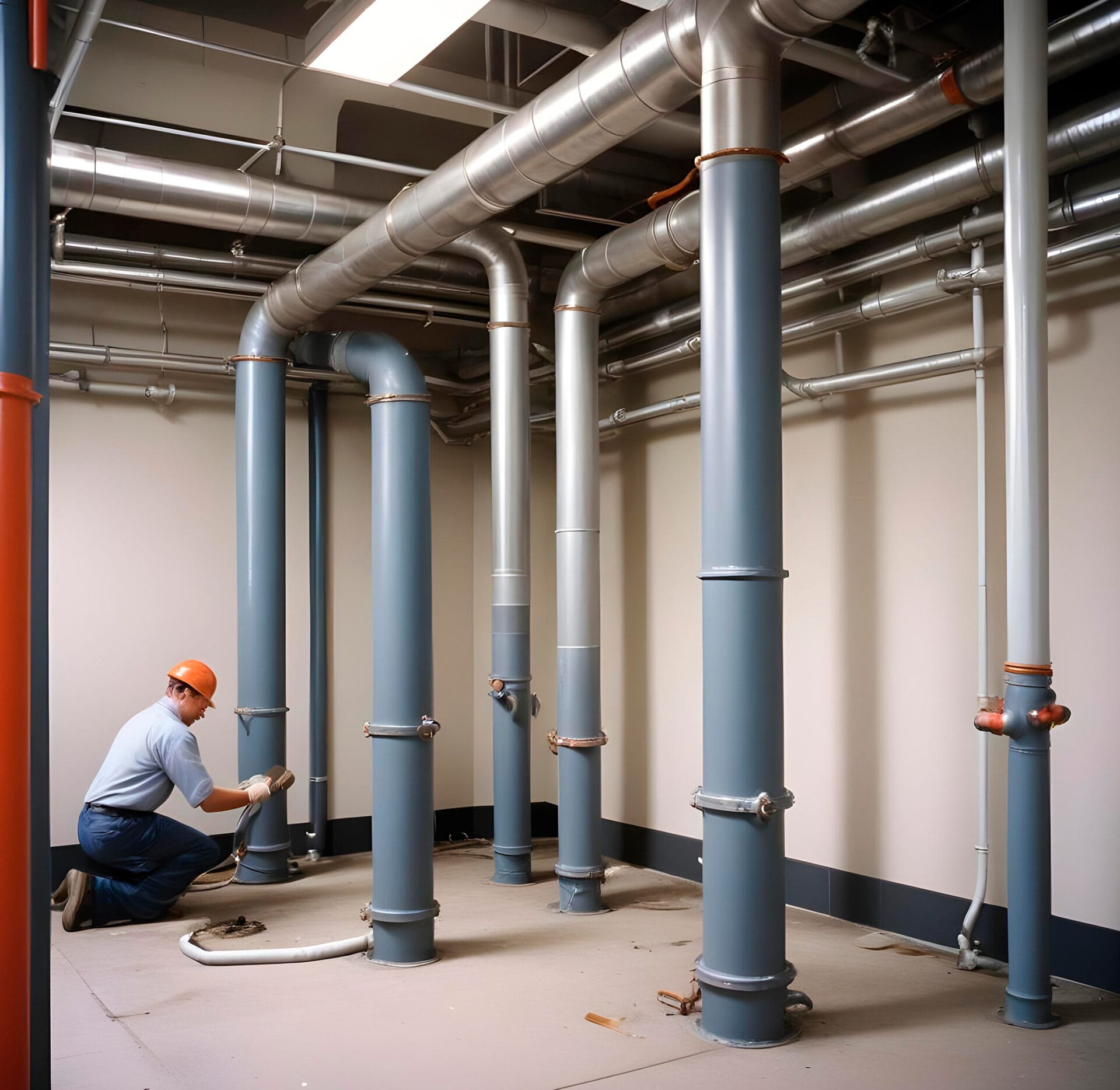
CCTV Pipe Inspection in Houston: How Sewer Camera Surveys Work
CCTV pipe inspection in Houston has become the standard method for assessing sewer lines, storm drains, and industrial process pipes without excavation. Closed-circuit television camera technology lets engineers and property owners see the interior condition of underground piping in real time, generating video records and condition codes that guide repair decisions and satisfy regulatory documentation requirements. TX Hydrojet provides full CCTV pipe survey services across Houston and Harris County for municipal clients, industrial facilities, and commercial property owners.
The Mechanics of a CCTV Sewer Survey
CCTV pipe inspection uses a watertight camera head attached to either a flexible push rod or a motorized crawler chassis. The camera transmits live footage to an above-ground monitor via a data cable. Operators document defects as they appear, assigning standard defect codes and severity ratings in real time. The footage is recorded, time-stamped, and archived so it can be reviewed later by engineers, property owners, or municipal inspectors.
Modern CCTV systems used in Houston inspections include:
- High-definition color cameras with wide-angle lenses that capture pipe wall detail in pipes as small as 3 inches.
- Integrated LED lighting powerful enough to illuminate 18-inch and larger diameter pipes clearly.
- Laser profiling modules that measure pipe deformation and ovality without contact, useful for identifying crushed or deformed sections.
- Sonar sensors for inspecting partially submerged pipes without dewatering — critical in Houston's frequently wet drainage infrastructure.
- Distance encoders that mark the precise distance of each defect from the access point, enabling accurate field location of buried defects.
CCTV Inspection Standards: NASSCO PACP
In Houston and across Texas, most municipal CCTV inspections must comply with NASSCO's Pipeline Assessment and Certification Program (PACP). PACP provides a standardized coding system for every type of pipe defect observed during a CCTV survey. Defect codes cover structural defects (cracks, fractures, collapses, deformation), operational defects (root intrusion, deposits, encrustation, infiltration), and construction quality observations (joint offsets, lateral connections, taps).
Each defect receives a score from 1 to 5, where 5 indicates an immediately defective condition requiring urgent attention. These scores roll up into an overall Structural Grade and Overall Grade for each pipe segment, giving asset managers a quantitative basis for prioritizing rehabilitation spending. The City of Houston's Public Works department and Harris County Flood Control District both reference PACP data in their infrastructure planning processes.
Residential vs. Commercial vs. Industrial CCTV Surveys
The scope and equipment requirements for a CCTV pipe inspection vary considerably by property type:
Residential Sewer Laterals
Most Houston homes use 4- to 6-inch PVC, cast-iron, or clay-tile sewer laterals running from the home to the municipal main. A push-camera CCTV inspection of a residential lateral typically takes 30 to 60 minutes. Common findings in older Houston neighborhoods include offset joints caused by clay-soil movement, root intrusion through clay-tile joints, and grease accumulation in kitchen drain laterals. A pipeline video inspection report gives homeowners documentation they can use when requesting sewer repairs from their municipality or negotiating real estate transactions.
Commercial and Multi-Family Properties
Restaurant kitchens, strip malls, apartment complexes, and office buildings generate significant grease, solids, and debris that accumulate in on-site sewer lines. CCTV inspections for commercial properties in Houston typically assess 6- to 12-inch lines running through parking lots or under slabs. Identifying build-up before it causes a backup protects businesses from costly downtime and sanitary code violations.
Industrial and Petrochemical Facilities
Facilities along the Houston Ship Channel, Texas City Ship Channel, and inland refinery corridors manage large-bore process piping, cooling water circuits, and wastewater collection systems. Industrial CCTV inspections at these sites often require confined-space protocols, gas monitoring, and coordination with operations teams to isolate pipe segments safely. TX Hydrojet's technicians are trained in refinery and petrochemical plant safety requirements, including OSHA confined-space entry and hot-work permit procedures.
What Happens After the CCTV Survey
A completed CCTV inspection delivers two primary outputs: the raw video recording and the condition report. The condition report lists each defect with its pipe location (distance from access), defect code, severity score, and recommended action. Depending on findings, next steps typically include one or more of the following:
- Hydro jetting: For grease, sediment, and soft root masses, hydro jetting removes accumulated material from pipe walls and restores full-bore flow.
- Pipe descaling: Mineral scale and heavy encrustation that resists jetting can be removed mechanically. Our pipe descaling service uses chain flails and cutter heads sized to the pipe diameter.
- Structural rehabilitation: Severely cracked or offset pipe segments may require cured-in-place pipe (CIPP) lining or traditional excavation and replacement.
- No action required: Pipes in good condition receive a clean bill of health, and the video record establishes a baseline for future comparison inspections.
How Often Should CCTV Inspections Be Scheduled?
Frequency depends on pipe age, material, and service conditions. General guidelines for Houston properties:
- Residential laterals — every 3 to 5 years for homes over 30 years old, or after any major blockage event.
- Commercial grease-generating facilities — annually, coordinated with grease trap service and drain cleaning cycles.
- Municipal sewer mains — on a risk-based cycle typically ranging from 5 to 10 years per segment, accelerated after infiltration events or overflow incidents.
- Industrial process piping — per facility maintenance plan, often tied to annual turnaround schedules or triggered by flow-rate monitoring alerts.
Why Choose TX Hydrojet for CCTV Pipe Inspection in Houston?
TX Hydrojet combines camera inspection with a full suite of pipe cleaning and rehabilitation services, which means we can mobilize a single crew to inspect, clean, and re-inspect in one visit. Our technicians hold NASSCO PACP certification, carry confined-space entry training, and are familiar with the access constraints and safety requirements of Houston's diverse infrastructure — from residential neighborhoods to industrial corridors near the Ship Channel.
Call (832) 776-0304 or visit our contact page to schedule a CCTV pipe inspection in Houston. We serve residential, commercial, municipal, and industrial clients throughout Harris County and the greater Houston metro area.
TX Hydrojet & Plumbing Team
Our team of licensed, insured plumbers in Houston, TX brings decades of combined experience to every job. We specialize in hydro jetting, drain cleaning, sewer repair, and 24/7 emergency plumbing services across the Greater Houston area.
(832) 776-0304