Industrial Surface Preparation in Houston: Hydroblasting for Coatings & Corrosion Removal
Industrial coatings are only as good as the surface preparation beneath them. Whether you're recoating structural steel at a Houston Ship Channel terminal, preparing pressure vessel exteriors at a Pasadena chemical plant, or refurbishing concrete floors in a Baytown manufacturing facility, industrial surface preparation in Houston demands methods that achieve specified cleanliness standards — not just visual cleanliness, but the kind of anchor profile and contamination removal that coating manufacturers require for warranty compliance and service life. Hydroblasting, or ultra-high-pressure (UHP) water blasting, has emerged as the leading technique for industrial surface prep on metal structures where coating adhesion and corrosion control are performance-critical.
Why Surface Preparation Determines Coating Performance
Studies by the Steel Structures Painting Council (now SSPC/AMPP) and decades of industrial coatings experience consistently show that surface preparation accounts for more of a coating's in-service failure than the coating itself. The most sophisticated epoxy or polyurethane coating system will fail prematurely if applied over a surface that retains:
- Soluble salts (chlorides, sulfates, nitrates) — drive osmotic blistering from beneath the coating film
- Old coating residues — incompatible primers or elastomeric remnants prevent mechanical bonding
- Mill scale — creates a brittle substrate layer that fails, taking the coating with it
- Oil and grease contamination — prevents wetting and adhesion
- Flash rust — iron oxide on fresh steel that wasn't recoated within the flash rust window
- Biological growth — algae, microbial films, and lichens on exterior structures
Traditional dry abrasive blasting with coal slag, steel grit, or steel shot achieves SSPC-SP 5 (White Metal) or SP 10 (Near-White) cleanliness on dry steel, but it generates enormous volumes of contaminated abrasive waste, requires respiratory protection and containment, and is restricted or prohibited in many environmentally sensitive areas along Houston's Ship Channel and coastal waterways. Hydroblasting addresses many of these limitations.
How Hydroblasting Achieves Industrial Surface Preparation Standards
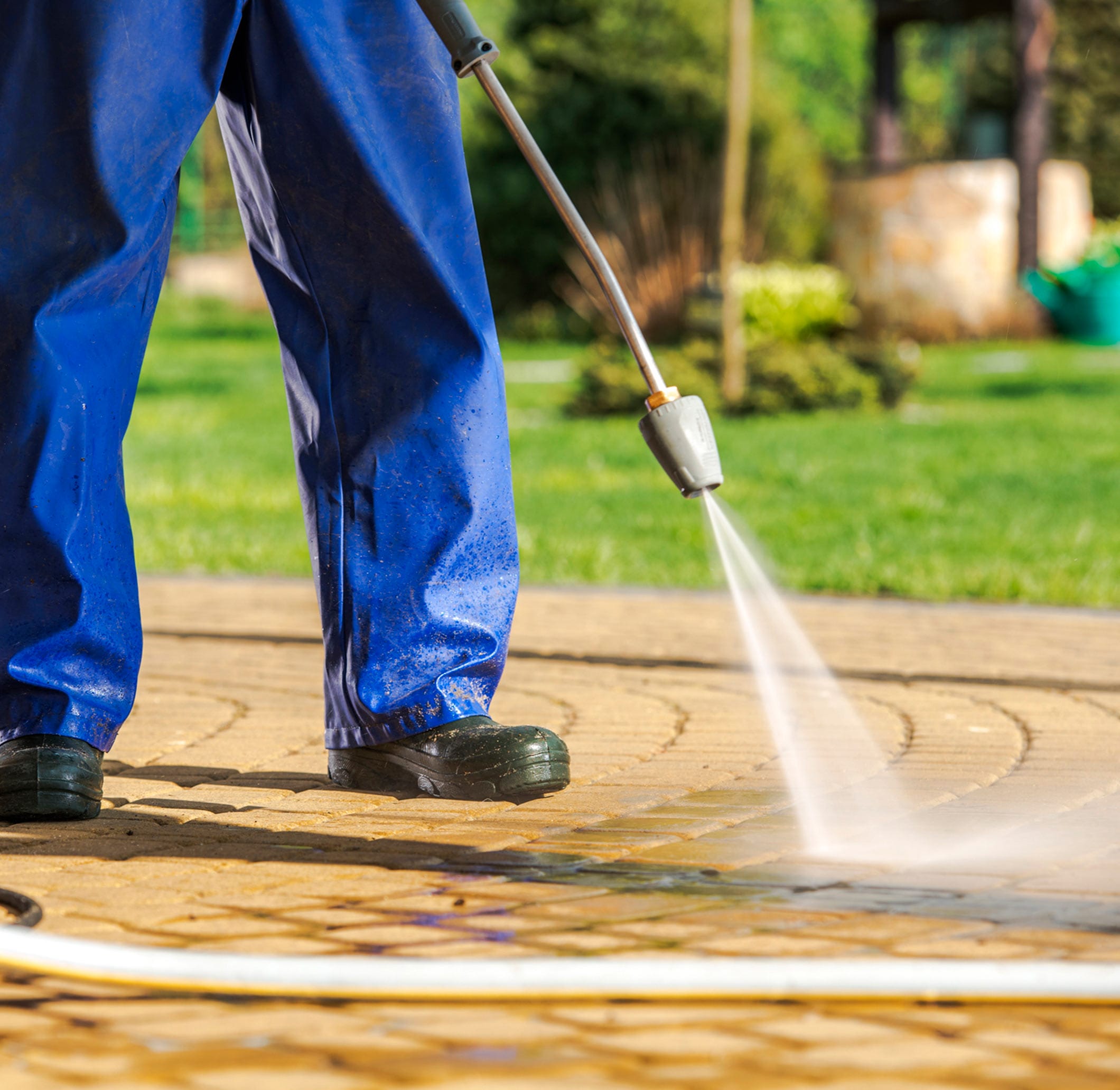
Hydroblasting services for surface preparation use ultra-high-pressure water — typically 20,000 to 40,000 PSI — without any added abrasive media. The mechanism is purely hydraulic: water at extreme pressure impacts the surface with enough kinetic energy to:
- Fracture and dislodge existing coating films, including multiple layer buildup
- Remove mill scale, rust scale, and corrosion products
- Dissolve and flush soluble salt contamination from the surface and from surface pores — something abrasive blasting cannot do
- Remove oil and grease through the physical hydraulic action and the addition of approved biodegradable degreasers when needed
SSPC and NACE (now AMPP) have established surface preparation standards specifically for water jetting: WJ-1 (equivalent to SP 5 White Metal on previously coated surfaces), WJ-2 (equivalent to SP 10 Near-White), WJ-3 (equivalent to SP 6 Commercial), and WJ-4 (equivalent to SP 7 Brush-Off). These standards allow coating manufacturers to accept waterjet-prepared surfaces for warranty coverage — a critical requirement for Gulf Coast industrial coating projects where service life warranties carry significant economic value.
Hydroblasting vs. Abrasive Blasting for Houston Industrial Surface Prep
Both methods have legitimate applications. Understanding the tradeoffs helps facility managers and contractors choose correctly:
- Soluble salt removal — Hydroblasting wins decisively. Water physically dissolves and removes chlorides and sulfates. Abrasive blasting can actually embed salts deeper into the surface profile, creating a corrosion initiation point beneath the new coating.
- Waste generation and disposal — Hydroblasting generates water-borne waste (rust, coating particles, water) that must be contained and disposed of properly. Abrasive blasting generates much larger volumes of spent abrasive mixed with hazardous coating material — a significant disposal cost for lead paint or other regulated coating removal projects.
- Environmental restrictions — Near waterways, Ship Channel facilities, and environmentally regulated zones in Harris County, dust-generating dry abrasive blasting may require extensive containment or may be prohibited. Water blasting has a much smaller environmental containment footprint.
- Anchor profile — Standard UHP water blasting alone does not create a new anchor profile on bare steel — it cleans to the profile that was already present. When a specific new anchor profile (2–3 mil for an epoxy system, for example) is required on bare substrate, wet abrasive blasting or the addition of a small abrasive feed to the water stream (wet/vapor blasting) may be specified.
- Flash rust management — Freshly waterblasted steel flash-rusts rapidly in Houston's humid climate. Proper scheduling, flash rust inhibitors, and tight recoating windows are essential. This is a known management challenge with hydroblasting that experienced surface prep contractors plan for.
Concrete Surface Preparation by Hydroblasting
Industrial hydroblasting for surface preparation isn't limited to steel. Concrete floors, secondary containment pads, and exterior concrete surfaces at Houston facilities require surface preparation before applying epoxy floor coatings, polyurethane membranes, or chemical-resistant linings. High-pressure water blasting removes:
- Curing compounds that prevent coating adhesion
- Oil and chemical stains embedded in the concrete surface
- Carbonation layers and laitance (weak surface concrete)
- Old failed coating systems
- Microbial growth and efflorescence
Waterblasting at 10,000–20,000 PSI achieves the International Concrete Repair Institute (ICRI) surface profile (CSP) ratings required by industrial floor coating specifications — typically CSP 3 to CSP 5 depending on coating thickness and service environment.
Industrial Applications in the Houston Area
TX Hydrojet & Plumbing provides industrial surface preparation hydroblasting for a range of applications throughout Houston, Harris County, and the Gulf Coast industrial corridor:
- Storage tank exteriors and interiors — floating roof tanks, fixed roof tanks, atmospheric storage
- Structural steel at refineries, terminals, and petrochemical plants
- Pressure vessel and heat exchanger exteriors before insulation or coating application
- Pipe rack structures and piping exteriors
- Concrete secondary containment pads before relining
- Industrial floor preparation for epoxy and chemical-resistant coating systems
- Marine and dock structures along the Ship Channel and Galveston Bay
Schedule Industrial Surface Preparation in Houston
Getting surface preparation right is the foundation of any successful industrial coating project. TX Hydrojet & Plumbing's hydroblasting crews bring the right equipment and technique specification knowledge to prepare surfaces to SSPC/AMPP WJ standards, properly manage flash rust, and coordinate with your coating applicator's recoat windows. We serve facilities throughout Houston, Pasadena, Baytown, Deer Park, and the greater Gulf Coast industrial region.
Call (832) 776-0304 or visit our contact page to discuss your surface preparation project scope, access constraints, and scheduling requirements. We're ready to help you achieve the surface cleanliness your coating system demands.
TX Hydrojet & Plumbing Team
Our team of licensed, insured plumbers in Houston, TX brings decades of combined experience to every job. We specialize in hydro jetting, drain cleaning, sewer repair, and 24/7 emergency plumbing services across the Greater Houston area.
(832) 776-0304