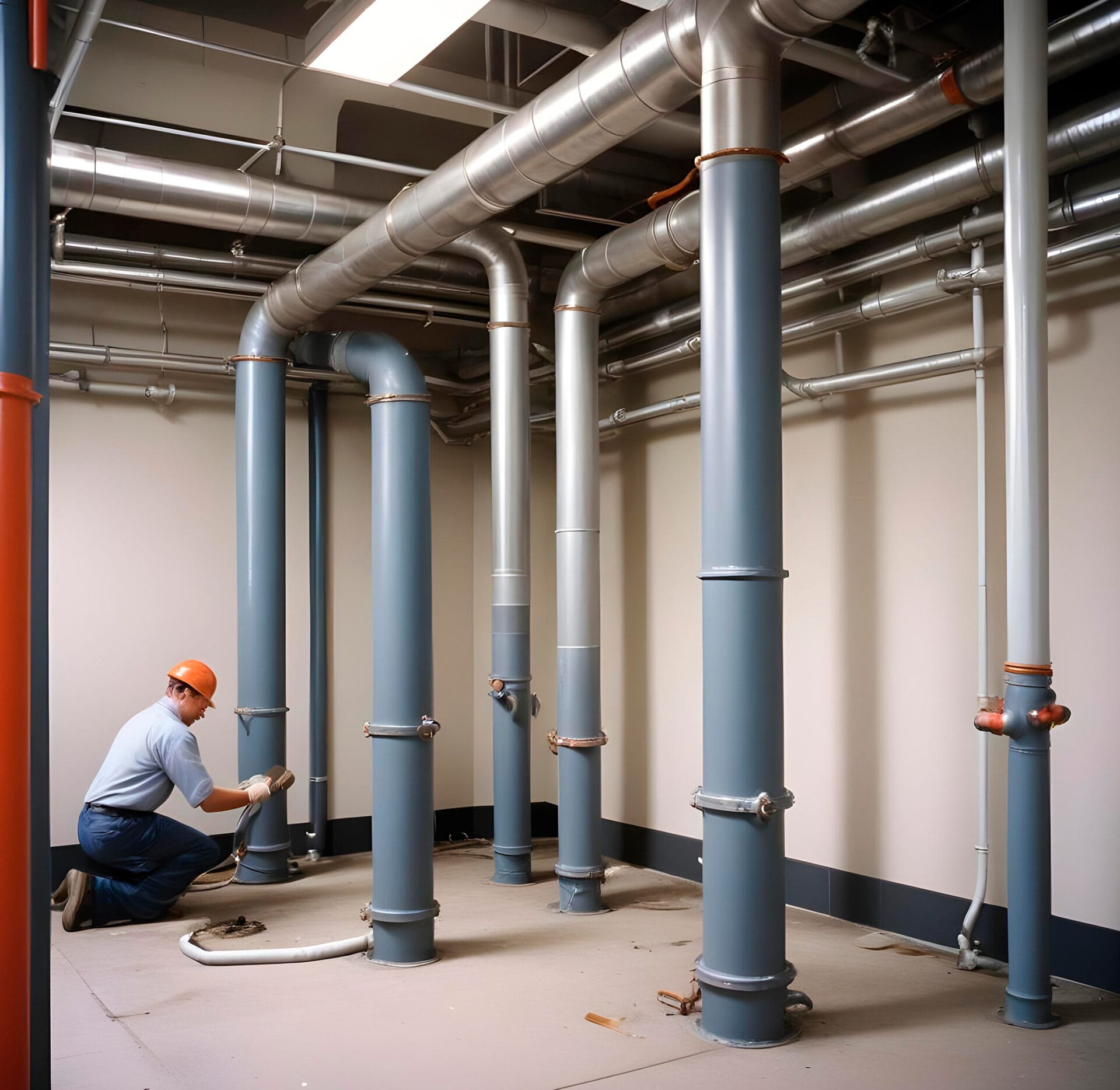
Houston MUD Districts and Hydrojetting: A Maintenance Guide for Board Members
Harris County operates more than 600 Municipal Utility Districts — a patchwork of independent taxing entities responsible for delivering water, treating sewage, and maintaining the underground infrastructure that keeps entire neighborhoods functioning. For the board members and property managers who govern these districts, the infrastructure itself is largely invisible until something goes wrong. A collapsed collector line, a grease-blocked interceptor, or a storm sewer choked with sediment does not announce itself in advance. It announces itself as a sanitary sewer overflow at 2 a.m., an EPA notice of violation, and an emergency repair bill that was never in the budget.
This guide is written for the people who sit across the table from district engineers and contractors — board members allocating taxpayer dollars, operators filing TCEQ reports, and property managers fielding calls from homeowners asking why the street is flooded. Harris County MUD maintenance is a fiduciary responsibility, not a facilities task. Understanding the tools available — including full-scale hydrojetting — is part of governing a district competently.
What is a MUD District? (And Why Maintenance Falls on the Board)
A Municipal Utility District is a special-purpose governmental entity created under Texas Water Code Chapter 49 and Chapter 54. In Harris County, most MUDs were formed during the development booms of the 1970s through the 2000s to finance water and wastewater infrastructure in areas outside city limits. Developers used MUD bonds to build the systems; homeowners and commercial property owners now pay district taxes to maintain them and retire that debt.
The critical detail for board members: once a MUD accepts infrastructure from a developer, operational and maintenance liability transfers to the district. That means the board is legally and financially responsible for every foot of gravity sewer, every lift station, every storm drainage channel, and every water line within district boundaries. TCEQ licenses and permits are issued to the district. Fines for violations are levied against the district. When a sewer line fails and raw sewage reaches a waterway, the district answers to the Texas Commission on Environmental Quality — not the original developer, not the engineering firm, and not the contractor who built it 30 years ago.
In Cypress, Katy, Fort Bend, and Brazoria County MUDs, this infrastructure often includes aging clay pipe sewer systems laid in the 1980s that have never been mechanically cleaned. Root intrusion, grease buildup, and sediment accumulation are not hypothetical risks in these systems — they are statistical certainties. The question is not whether buildup will impair flow capacity. The question is whether the board addresses it proactively on a scheduled maintenance budget or reactively at three times the cost during an emergency.
The Hidden Costs of Skipping Annual Sewer Hydrojetting
District engineers often recommend annual or biennial MUD district sewer cleaning as a line item in the operations and maintenance budget. Boards that defer this work to preserve budget flexibility frequently discover that deferred maintenance is not savings — it is a debt accruing interest in the form of accelerating system degradation.
Consequences of Deferred Sewer Cleaning
- Sanitary sewer overflows (SSOs): Blockages caused by grease, roots, and debris force sewage back up through manholes or cleanouts. Each SSO is a reportable event under TCEQ regulations and a potential EPA enforcement trigger. Fines can reach $10,000 per day per violation under the Clean Water Act.
- Accelerated pipe deterioration: Hydrogen sulfide gas produced by organic buildup in slow-moving sewage attacks concrete and clay pipe walls. Systems that are not cleaned regularly corrode from the inside at a measurably faster rate, shortening the effective service life of infrastructure that costs $80 to $200 per linear foot to replace.
- Lift station overloads: Restricted collector lines back pressure into lift stations, increasing pump cycle frequency and wear. A pump replacement that was three years away can become a current-year emergency when flow restrictions go unaddressed.
- Emergency overtime costs: A planned cleaning crew costs a fraction of an emergency response team mobilized at 11 p.m. on a Friday. Districts that have experienced emergency SSO response events consistently report that a single overnight callout exceeds the annual cost of preventive cleaning for the affected segment.
- Insurance and bonding exposure: SSO events and regulatory violations affect a district's risk profile. Some liability carriers have begun reviewing SSO history during renewal underwriting for special-purpose governmental entities in Texas.
- TCEQ compliance investigations: A pattern of SSO reports can trigger a TCEQ investigation, which may result in a compliance order requiring the district to fund and execute a corrective action plan — on TCEQ's timeline, not the district's budget cycle.
The data from districts that have implemented scheduled hydrojetting programs is consistent: SSO frequency drops, lift station maintenance intervals extend, and the total five-year cost of sewer operations decreases even after accounting for the cleaning contract costs. Prevention is measurably cheaper than response.
How Hydrojetting Works for MUD-Scale Infrastructure
Hydrojetting uses high-pressure water — delivered through a specialized nozzle pulled through the pipe by the force of the water jet itself — to scour pipe walls clean. At the residential scale, a technician working on a 4-inch drain line operates equipment producing 1,500 to 3,000 PSI. That is sufficient for a kitchen drain or a single lateral. It is not the right tool for a 12-inch gravity sewer main carrying flow from 400 homes.
Municipal utility district hydrojetting operates at a fundamentally different scale. Trunk mains and collector sewers in Harris County MUDs typically range from 8 inches to 24 inches in diameter. Cleaning these lines requires truck-mounted combination units — commonly called combo units or vactor trucks — that deliver 2,000 to 4,000 gallons per minute of water at pressures from 2,000 to 4,000 PSI. The same unit carries a high-capacity vacuum system that simultaneously recovers the debris, roots, and sediment being flushed from the line. Without vacuum recovery, the debris simply relocates downstream and creates a new restriction.
The equipment scale matters for procurement. A contractor who owns residential jetter equipment and a residential trailer is not equipped for MUD work. The minimum equipment standard for a district-scale cleaning contract should include:
- A DOT-compliant combination sewer cleaning truck with a minimum 12-cubic-yard debris body
- Pressure capacity of at least 2,500 PSI with a minimum 80 GPM flow rate for pipes up to 18 inches
- Appropriate nozzle selection for root cutting, grease removal, and sediment flush based on NASSCO PACP inspection findings
- A dedicated spotter and confined space entry-qualified crew for manhole access work
- Call 811 compliance for any excavation or investigative dig that accompanies the cleaning work
For storm sewer cleaning in Houston — where Harris County MUDs often own detention basins, outfall structures, and concrete-lined channels — the equipment requirements include large-bore vacuum hoses capable of recovering heavy aggregate and silt loads that would overwhelm residential-grade equipment.
What Should Be on Your MUD's Annual Maintenance Schedule
A well-governed district treats infrastructure maintenance as a recurring operational function, not a crisis response. The following framework reflects standard practice for active Harris County MUDs and aligns with TCEQ operator certification continuing education requirements.
- CCTV inspection of high-priority sewer segments: Use NASSCO PACP-coded inspection to identify pipe condition, root intrusion grades, and defect locations. Prioritize mains with prior SSO history, segments over 25 years old, and areas with heavy clay soils or large canopy trees.
- Annual hydrojetting of grease-prone interceptors: Segments downstream of commercial developments, apartment complexes, and food service operations require minimum annual cleaning. Semi-annual cleaning is appropriate for high-grease corridors.
- Biennial cleaning of residential collector mains: Residential gravity sewers in well-functioning systems typically require cleaning every two years. Adjust frequency based on CCTV findings and SSO history.
- Storm sewer cleaning Houston — pre-hurricane season: Harris County's storm season peaks May through November. Inlet cleaning, outfall inspection, and detention basin sediment surveys should be completed by April 30 each year.
- Lift station wet well cleaning: Quarterly inspection and annual wet well cleaning prevents grease buildup that degrades float switches, corrodes pump impellers, and creates odor complaints from adjacent property owners.
- Manhole inspection and rehabilitation assessment: Annual visual inspection of manholes in the cleaning work zones. Document infiltration, inflow, and structural defects. Schedule rehabilitation or lining for any manhole with active inflow.
- Root foaming or chemical root control: In districts with documented root intrusion, dichlobenil foam application after mechanical cleaning reduces regrowth cycles and extends the interval between required cleanings.
- Documentation and reporting to district engineer: All maintenance activities should generate a field report suitable for inclusion in the annual operations report submitted to TCEQ.
Compliance, Documentation, and the TCEQ Side of the Job
TCEQ-licensed wastewater system operators are required to maintain records demonstrating that systems are being actively managed. For MUD boards, this documentation is not administrative overhead — it is your evidence of prudent governance in the event of a regulatory inquiry, a rate case before the TCEQ, or a legal challenge from a downstream property owner who suffered flood or sewage damage.
Specifically, district records should include:
- CCTV inspection logs with NASSCO PACP coding and video archives, retained for a minimum of five years
- Hydrojetting and cleaning contractor field reports identifying the segment cleaned, the date, the crew, and the debris volume recovered
- SSO incident reports filed with TCEQ within the required reporting window (24 hours for releases reaching surface water)
- Lift station maintenance logs including pump run times, alarm events, and wet well cleaning dates
- Annual operator certification documentation for the licensed wastewater operator of record
For storm sewer cleaning Houston work that disturbs or accesses Harris County Flood Control District easements or right-of-way, additional permitting coordination may be required. Contractors working in these areas should carry Harris County Flood Control approval documentation before mobilizing equipment.
Boards that engage contractors who provide complete, signed field reports after every service call are in a significantly stronger compliance position than boards that rely on verbal updates. Require documentation as a contract deliverable, not a courtesy.
Choosing the Right MUD Hydrojetting Contractor
Not every plumbing or drain cleaning company operating in the Houston metro is equipped, insured, or experienced enough to work on district infrastructure. Selecting the wrong contractor creates liability exposure for the district and often produces work that needs to be repeated within 12 months. Evaluate candidates against the following criteria:
- Commercial combination unit equipment: Verify the contractor operates a truck-mounted vactor or combination unit with documented pressure and flow specifications appropriate for the pipe diameters in your system. Request equipment photographs and specifications before awarding a contract.
- NASSCO PACP certification: Contractors performing or coordinating CCTV inspection as part of a cleaning program should hold current NASSCO Pipeline Assessment and Certification Program credentials. This ensures inspection data is coded in a standardized format that your district engineer can use for capital planning.
- Proof of current commercial general liability and pollution liability insurance: Minimum $1 million per occurrence for CGL; pollution liability is non-negotiable for any contractor who may encounter petroleum-contaminated soils or chemical residues in district infrastructure. Require a certificate of insurance naming the district as additional insured.
- Harris County and municipal references: Request references from other MUDs, cities, or utility districts in the Houston area. A contractor who has cleaned lines for Katy, Cypress, or Fort Bend County MUDs understands the regulatory environment and the infrastructure characteristics common to this region.
- Call 811 compliance protocol: Any contractor doing investigative work that may involve locating or exposing buried infrastructure must have a documented 811 notification procedure. Failure to call 811 before digging creates liability for both the contractor and the district.
- Emergency response availability: Districts should verify that their contractor can respond to an emergency SSO callout within a defined window — typically four hours for standard emergencies and two hours for events that reach surface water. Get this commitment in writing.
- Documented field reporting: Require that the contractor provide a per-segment cleaning report including start time, end time, approximate debris volume, any anomalies observed (root intrusion, broken pipe, offset joints), and crew certification. This documentation supports your TCEQ compliance records and your district engineer's capital planning analysis.
FAQ
What does a full hydrojetting program cost for a typical Harris County MUD?
Cost varies significantly based on the linear footage of pipe in the district, the pipe diameters, the degree of buildup, and the current condition of the system. Most active residential MUDs in Harris County budget between $15,000 and $60,000 annually for a combination of CCTV inspection and hydrojetting services. Districts with older systems, high grease loads from commercial frontage, or documented root intrusion problems should budget at the higher end of that range. Emergency cleaning events — mobilized outside the scheduled program — typically cost two to four times the equivalent planned-work rate, which is the primary financial argument for maintaining a proactive cleaning contract.
How often should MUD sewer lines be cleaned?
The answer depends on what CCTV inspection reveals. As a baseline, gravity sewer mains in residential MUDs are commonly cleaned every one to two years. Segments downstream of commercial cooking operations, multifamily developments, or in areas with documented root intrusion should be cleaned annually. Following an SSO event, the affected segment and its upstream tributaries should be cleaned and inspected regardless of when the last scheduled cleaning occurred. Your district operator and licensed engineer should drive this schedule based on inspection findings rather than a calendar-only approach.
What happens if we have an SSO and haven't been cleaning the lines?
TCEQ investigates SSO events that are reported or discovered through field inspection. If the investigation reveals that the overflow resulted from a preventable blockage — grease, roots, or sediment accumulation — and the district has no documented cleaning program, the district faces significantly greater enforcement exposure than a district that can demonstrate active maintenance and an anomalous failure. Regulatory investigators look at maintenance records as evidence of operator diligence. The absence of a cleaning program, combined with an SSO, is a pattern TCEQ treats as a systemic failure rather than an isolated incident. The resulting compliance order typically requires the district to fund and execute a corrective action plan at TCEQ-directed pace and scope.
Can the same contractor handle both sewer cleaning and storm sewer cleaning in Houston?
Some contractors are equipped to handle both gravity sewer cleaning and storm inlet or culvert cleaning with the same combination unit. However, storm sewer work — particularly sediment removal from large-bore culverts, concrete-lined channels, and detention basin outfalls — may require additional equipment such as crane trucks or high-capacity vacuum excavators. Verify that your contractor's equipment is sized for the specific storm drainage structures in your district before including storm infrastructure in a sewer cleaning contract. For districts near Harris County Flood Control channels, confirm the contractor is familiar with HCFCD right-of-way permit requirements before mobilizing.
Do our contractors need to be TCEQ licensed to work in the district?
The TCEQ license requirement applies to the district's designated wastewater system operator, not to every contractor performing cleaning or maintenance work. However, the licensed operator of record is responsible for supervising maintenance activities and ensuring that work is performed in compliance with the district's TCEQ permit. Contractors should hold any applicable trade licenses required under Texas Occupations Code for plumbing or drain work, and they should be able to document current liability insurance. For CCTV inspection work that will be used in regulatory filings or capital improvement planning, NASSCO PACP certification is the recognized professional standard.
TX Hydrojet and Plumbing serves Harris County MUDs, special utility districts, and commercial property managers across the greater Houston area, including Cypress, Katy, and communities throughout Fort Bend and Brazoria Counties. Our combination unit equipment, NASSCO PACP-trained crews, and documented field reporting are designed specifically for the compliance and fiduciary requirements that govern district maintenance programs. If your board has not reviewed your sewer cleaning schedule recently — or if your district has never had a systematic hydrojetting program — we offer no-obligation site assessments to help you establish a baseline. For SSO emergencies, we maintain 24-hour response availability.
Call (832) 203-7987 to schedule a no-obligation site assessment for your MUD district. We will review your pipe inventory, discuss your current maintenance program, and provide a written scope and cost estimate appropriate for your next board meeting. If your district needs sewer line repair alongside a cleaning program, we handle both under a single contract — reducing vendor coordination burden on your district operator and engineer.
TX Hydrojet & Plumbing Team
Our team of licensed, insured plumbers in Houston, TX brings decades of combined experience to every job. We specialize in hydro jetting, drain cleaning, sewer repair, and 24/7 emergency plumbing services across the Greater Houston area.
(832) 203-7987