Hydrovac Excavation in Houston: When Daylighting and Potholing Beat Traditional Digging
Every general contractor in Houston has a story about a cut utility line. Maybe it was a fiber trunk that knocked out a data center in the Galleria corridor for six hours, or a gas main nicked during a foundation repair in Pearland that turned a $4,000 job into a $40,000 emergency shutdown. The math is brutal: a single strike against an unmarked high-pressure gas line can generate OSHA fines, contractor liability claims, and project delays that dwarf the original contract value. And in Harris County, where the underground infrastructure is some of the most congested in the state, the question isn't whether you'll encounter buried utilities on a dig — it's how many you'll encounter and how close together they'll be.
The solution the industry has landed on is hydrovac excavation, a process that replaces the blind aggression of a steel bucket with pressurized water and a vacuum system. It's slower than a backhoe. It's also radically safer, legally defensible, and increasingly the only method that satisfies insurance carriers, general contractors, and municipal inspectors for any dig within the proximity of known utilities. This guide explains exactly what hydrovac excavation is, where it fits in a project scope, and what to expect when you hire a vacuum excavation Houston contractor to do the work right.
What Is Hydrovac Excavation, Exactly?
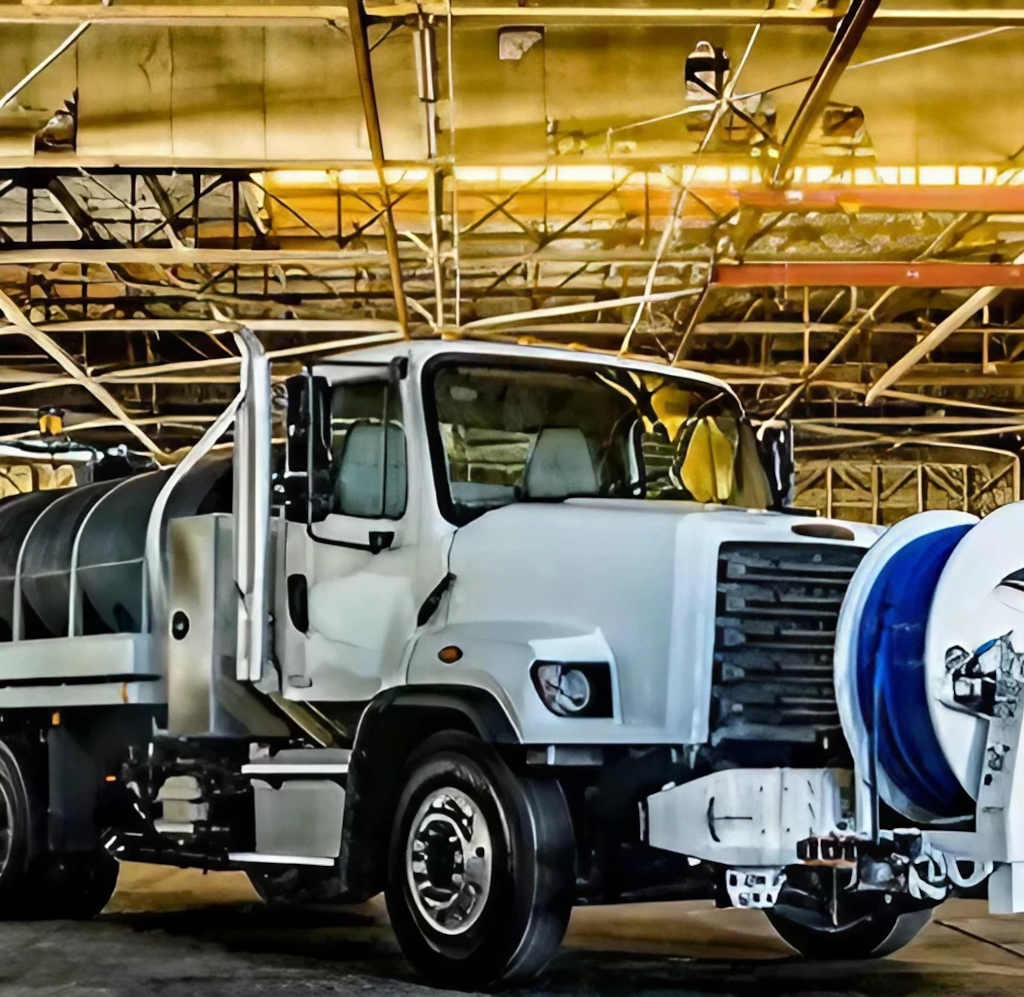
A hydrovac truck carries two main systems: a high-pressure water pump and a powerful industrial vacuum. The water lance breaks up soil — clay, sand, caliche, or compacted fill — while the vacuum simultaneously pulls the resulting slurry into an onboard debris tank. The excavation is surgical. The operator controls both the water pressure and the vacuum intake to expose whatever is buried without contacting it with metal. Once the debris tank is full, it's hauled offsite or the slurry is offloaded at an approved facility.
Modern units run water pressure between 1,500 and 2,500 PSI, with some cold-weather configurations running heated water to deal with frozen ground in northern Texas winters. Vacuum systems on full-size trucks typically generate 27 to 53 inches of mercury, enough to pull debris through an 8-inch hose from excavations 20 feet or more below grade. The result is a clean, controlled opening — sometimes called a "pothole" when small, sometimes a full trench section — where the buried infrastructure is clearly visible, measurable, and safe to work around. That's the core of what hydrovac excavation Houston contractors provide.
Daylighting vs. Potholing vs. Trenching — Plain English
These three terms are often used interchangeably on job sites and in RFPs, but they describe meaningfully different scopes of work. Getting them straight matters when you're writing a bid, reviewing a subcontractor invoice, or explaining the method to a project owner who wants to know why you're not using a mini-ex.
Daylighting
Daylighting excavation refers specifically to exposing a buried utility to daylight so its depth, material, and horizontal position can be confirmed with certainty. The name is literal: you're bringing the pipe or conduit to a point where it can be visually verified. Daylighting is most commonly used before a horizontal directional drill (HDD) bore, before a road crossing, or before any installation that crosses or runs parallel to an existing utility. The excavation is typically a small rectangular hole — often 18 to 36 inches wide and only as deep as necessary to expose the target. According to ASTM F3275, the standard practice for vacuum excavation, daylighting should confirm the utility's centerline position to within ±3 inches when used to verify 811 locate data. Daylighting excavation in the Houston metro ranges from roughly $1,500 for a straightforward single-utility expose to $8,000 or more for deep, multi-utility excavations in tight urban corridors.
Potholing
Potholing utilities is the process of creating a series of small test holes along a utility corridor to establish depth profile and detect crossings. Where daylighting might confirm one known utility at a single point, potholing maps a line — typically at intervals of 20 to 50 feet along the planned bore path. Utility contractors use potholing data to program HDD equipment, calculate bore angles, and flag crossings that 811 locates may have missed. Fort Bend County road projects, for example, routinely require potholing every 25 feet across any county ROW bore before a permit is issued. The term "pothole" comes from the small-diameter, roughly circular openings the vacuum hose creates, as opposed to the long linear slot of a traditional trench.
Why Neither Is the Same as Trenching
Traditional trenching with a backhoe or trenching machine is a production operation: it removes large volumes of soil quickly to create a continuous opening for pipe installation or cable runs. It is appropriate when the utility corridor is clean, the depth is known, and the goal is footage per hour. Hydrovac daylighting and potholing are investigation operations. They answer the question "what is actually down there?" before the production crew arrives. Mixing these up creates real problems: a contractor who sends a trencher into an unmarked utility corridor to "pothole" it is doing the wrong job with the wrong tool. The legal distinction matters too — OSHA 29 CFR 1926.651(b)(1) requires positive identification of utilities before excavation, and "positive identification" in practice means visual confirmation, not just 811 locate paint on the ground.
Why Houston Job Sites Mandate Soft-Dig Methods Now
The regulatory and insurance environment around excavation has tightened substantially over the past decade, and the Houston metro sits at the intersection of several overlapping pressures that make soft-dig methods the default on any professional job site.
811 Call-Before-You-Dig requirements are mandatory in Texas under the Texas Underground Facility Damage Prevention and Safety Act (Utilities Code Chapter 251). Filing an 811 ticket and waiting the required two business days is not optional, and it is not sufficient. The Texas One-Call system identifies registered facilities, but abandoned conduits, private utility lines, and improperly documented infrastructure do not appear in the system. On older Houston-area properties — especially in Galveston County and the inner loop neighborhoods built before modern record-keeping standards — non-registered lines are common. Only vacuum excavation confirms what 811 cannot.
OSHA 1926.651, the excavation standard, requires that the "exact location of underground installations shall be determined" before digging begins. OSHA has cited contractors specifically for using mechanical excavation within the tolerance zone of a located utility. If an OSHA inspector arrives at a job site and the crew is using a backhoe within two feet of a painted locate without a prior vacuum excavation confirmation, that is a citable condition.
TCEQ rules governing water and wastewater infrastructure add another layer for any work near municipal lines in Harris County. Projects involving underground utility locating Houston near water treatment infrastructure or within flood control zones can trigger TCEQ review, and project documentation increasingly requires evidence of non-destructive excavation methods near sensitive infrastructure.
Insurance carriers have started writing explicit exclusions for utility strike claims on projects where the contractor cannot demonstrate that soft-dig confirmation was used within the tolerance zone. Several major commercial general liability underwriters serving the Texas construction market now require written documentation of hydrovac pre-qualification before excavation within 18 inches of any located utility.
When to Choose Hydrovac (and When to Choose Air Vac Instead)
Hydrovac is the right tool for most situations involving dense clay or compacted soil, which describes most of the Houston area. Water breaks up Houston's heavy clay profile efficiently, and the slurry is manageable at most project sites. However, there are situations where air vacuum excavation — also called air knife or pneumatic excavation — is the better choice.
- Use hydrovac when you're working in clay-heavy soil, need to excavate to significant depth quickly, are doing potholing or daylighting in a contaminated zone where dewatering controls are already in place, or when the project timeline is tight and footage matters.
- Use air vac when you're working around fiber optics, direct-burial cable, or any conduit where even low-pressure water contact is a concern. Air excavation eliminates water intrusion risk entirely. It is also preferred around electrical infrastructure where voltage hazard makes any conductive medium undesirable in the excavation zone.
- Use air vac near tree root systems. Water excavation can damage fine feeder roots and carry soil amendments out of the root zone. Arborist-specified air spading for utility work near heritage trees is the industry standard.
- Use hydrovac for anything deeper than about 10 feet. Air vac loses efficiency with depth; hydrovac maintains consistent performance to 20+ feet when properly equipped.
Many Houston-area vacuum excavation contractors run both systems on the same truck. Ask specifically which method will be used and why, and request confirmation that the operator has experience with both techniques before mobilization.
A Real Houston Use Case: Sugar Land Sewer Tie-In
A utility contractor in Sugar Land was awarded a contract to connect a new mixed-use development to the Fort Bend County municipal sewer system. The bore path crossed a fiber bundle, two conduit banks, and an aging water main that 811 records showed at an estimated depth of six feet. The contractor called TX Hydrojet & Plumbing to pothole the crossing before the HDD crew mobilized.
The hydrovac team ran four potholes along the 80-foot crossing corridor at 20-foot intervals. The fiber bundle appeared at 4.5 feet — shallower than the 811 estimate by nearly 18 inches. The water main was found at 5.2 feet, slightly deeper than mapped, and had shifted horizontally by approximately 14 inches from the painted locate line. Without the potholing data, the bore crew would have programmed a crossing that would have bisected the fiber bundle. The HDD operator adjusted the bore profile based on the confirmed depth data and the crossing went clean. Total time for the pothole investigation: four hours. Estimated cost of a fiber strike at that location: $80,000 to $120,000 in emergency repair, data center downtime claims, and OSHA exposure.
Cost Expectations for Hydrovac in the Houston Metro
Hydrovac pricing in the Houston area varies based on several factors. The following ranges reflect typical market pricing in Harris, Fort Bend, and Brazoria Counties.
- Single utility daylighting (shallow, known depth): $1,500 to $3,500
- Multi-utility daylighting (complex urban corridor): $4,000 to $8,000
- Potholing programs (per hole, production rates): $300 to $600 per hole depending on depth and soil conditions
- Industrial sewer line cleaning with vacuum: $3,000 to $15,000 depending on line diameter, footage, and debris load
- Mobilization: Most contractors include mobilization within a defined radius (commonly 30 miles from base) and charge $150 to $400 per trip beyond that
Variables that move price up: rock or caliche requiring higher water pressure and slower progress; contaminated slurry requiring special disposal; permit-required traffic control; confined space classification on the receiving end; and emergency or after-hours response. Variables that hold price down: pre-cleared access, simple soil profiles, and proximity to the contractor's base of operations. For anything beyond a single daylight on known infrastructure, request a site visit before committing to a fixed price — experienced contractors will want to see the soil conditions and access constraints firsthand.
TX Hydrojet & Plumbing also performs related hydrojetting and sewer line work that often runs in parallel with vacuum excavation projects, which can reduce total mobilization cost when both services are needed on the same site.
Choosing a Houston Hydrovac Contractor — Checklist
Not all vacuum excavation companies operating in the Houston market are equal. Before you award work, work through this checklist with any prospective contractor.
- General liability insurance of at least $2 million per occurrence, with the policy specifically covering underground utility work and naming your organization as an additional insured. Request the certificate before mobilization, not after.
- Operators with 811 training and documented tolerance zone procedures. Ask specifically whether operators have completed Common Ground Alliance (CGA) or equivalent training and whether the company has written SOPs for working within the tolerance zone.
- TCEQ compliance for slurry disposal. The debris from hydrovac excavation is regulated waste in Texas when it contains contaminated soil. Confirm that your contractor has a documented disposal chain and can provide manifests if requested.
- Equipment rated for Houston soil conditions. Ask about water pressure ratings and vacuum ratings. Trucks sized for light-duty potholing in sandy soil will struggle in Houston's deep clay and may require multiple mobilizations to complete work a full-size unit handles in one visit.
- Response time commitments. On active construction projects, a utility strike emergency requires same-day or next-day vacuum excavation. Confirm the contractor's emergency response capability before you're in a crisis.
- References from comparable project types. A contractor who primarily does residential work is not the same as one with a portfolio of utility contractor and general contractor clients on commercial and infrastructure projects. Ask for two or three references from projects similar to yours in scope and soil conditions.
- Documentation capability. The hydrovac investigation produces data — depths, horizontal positions, GPS coordinates, photos. Confirm the contractor can deliver a marked-up as-found drawing or a photographic record suitable for your project documentation requirements.
- Familiarity with local jurisdictions. Harris County, City of Houston, and surrounding municipalities each have specific permit and traffic control requirements for vacuum excavation in the ROW. A contractor who regularly works Katy, Pearland, and the Galleria area will have these relationships established; one who is new to the market may not.
FAQ
Does hydrovac excavation damage utilities?
When performed correctly, hydrovac excavation does not damage utilities. Water pressure at standard daylighting settings (typically 1,200 to 1,800 PSI at the nozzle) will not damage steel, cast iron, PVC, HDPE, or concrete pipe. Fiber optic conduit and direct-burial cable require more care; a competent operator reduces pressure and works at a greater standoff distance near these materials. Air vacuum excavation is the preferred method when fiber is the primary concern.
How long does a typical potholing job take?
A single pothole to 8 feet in Houston clay typically takes 30 to 90 minutes including setup and breakdown. A production potholing program of 10 to 20 holes in accessible, single-lane conditions can usually be completed in one eight-hour shift with a two-person crew. Depth, soil conditions, access restrictions, and traffic control complexity are the primary variables.
Is 811 enough, or do I really need hydrovac?
811 locates are a legal requirement and a starting point, not a guarantee. The Texas One-Call system only identifies lines registered by member utilities. Private lines, abandoned infrastructure, and improperly documented crossings do not appear in the system. In established Houston-area corridors, it is common to find multiple unregistered lines during vacuum excavation. If any dig is within the tolerance zone (typically 18 to 24 inches of a painted locate), vacuum excavation confirmation is the industry standard and increasingly a contractual and insurance requirement.
Can hydrovac be used for trench excavation, not just potholing?
Yes. Hydrovac can create continuous trenches, though it is slower and more expensive per linear foot than mechanical trenching. It is the correct choice for trench excavation within congested utility corridors, for service connections in downtown Houston where underground infrastructure density makes mechanical trenching genuinely dangerous, and for any trench that must pass within the tolerance zone of located utilities. In open areas with clean soil, mechanical methods are generally more cost-effective for production trenching.
TX Hydrojet & Plumbing serves general contractors, utility contractors, and project managers throughout the Houston metro — Harris County, Fort Bend County, Brazoria County, and the Galveston area. Our hydrovac crews are equipped for same-day emergency response, and we carry the documentation and insurance coverage that commercial project owners require. Call us at (832) 203-7987 to discuss your project scope, get a site visit scheduled, or request a quote for potholing or daylighting services. We'll tell you straight whether your project is a half-day job or a multi-day program — and we'll show up ready to do it right.
TX Hydrojet & Plumbing Team
Our team of licensed, insured plumbers in Houston, TX brings decades of combined experience to every job. We specialize in hydro jetting, drain cleaning, sewer repair, and 24/7 emergency plumbing services across the Greater Houston area.
(832) 203-7987